Reward Pathways Linking Slot Machines to Multi-Sport Parlay Calculations
Iris Long · Aug 23, 2026
Reward Pathways Linking Slot Machines to Multi-Sport Parlay Calculations
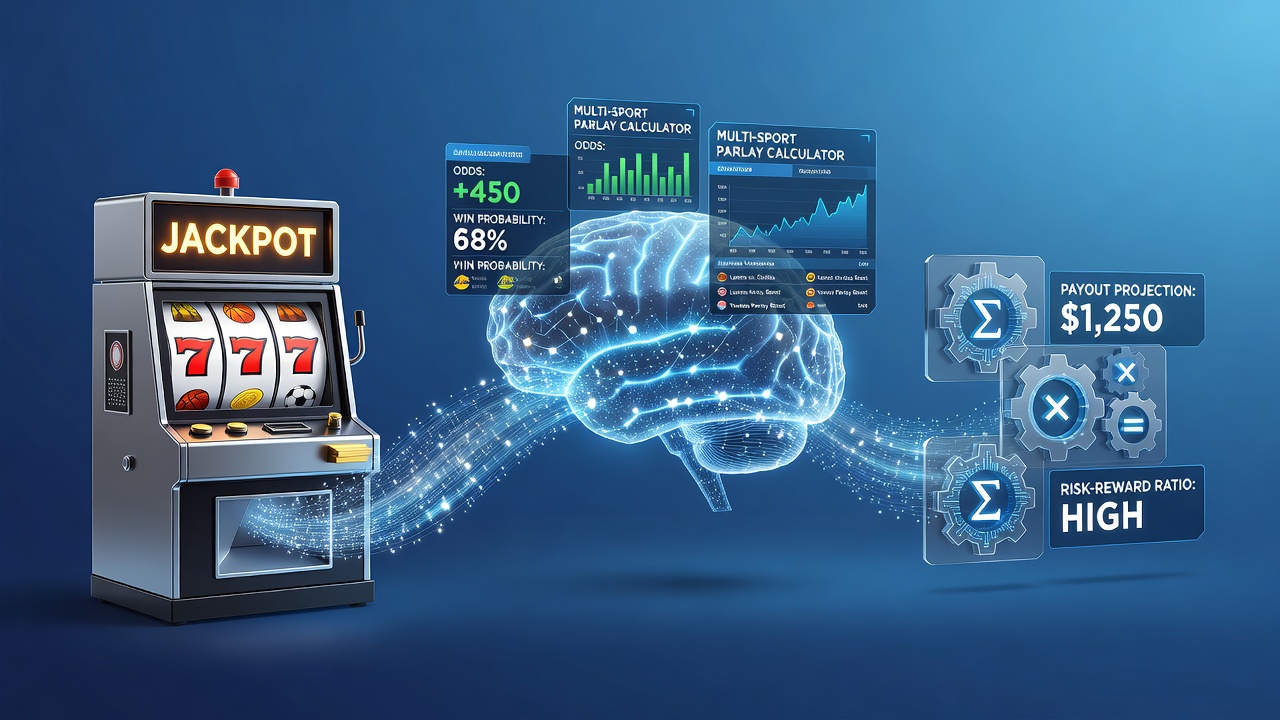
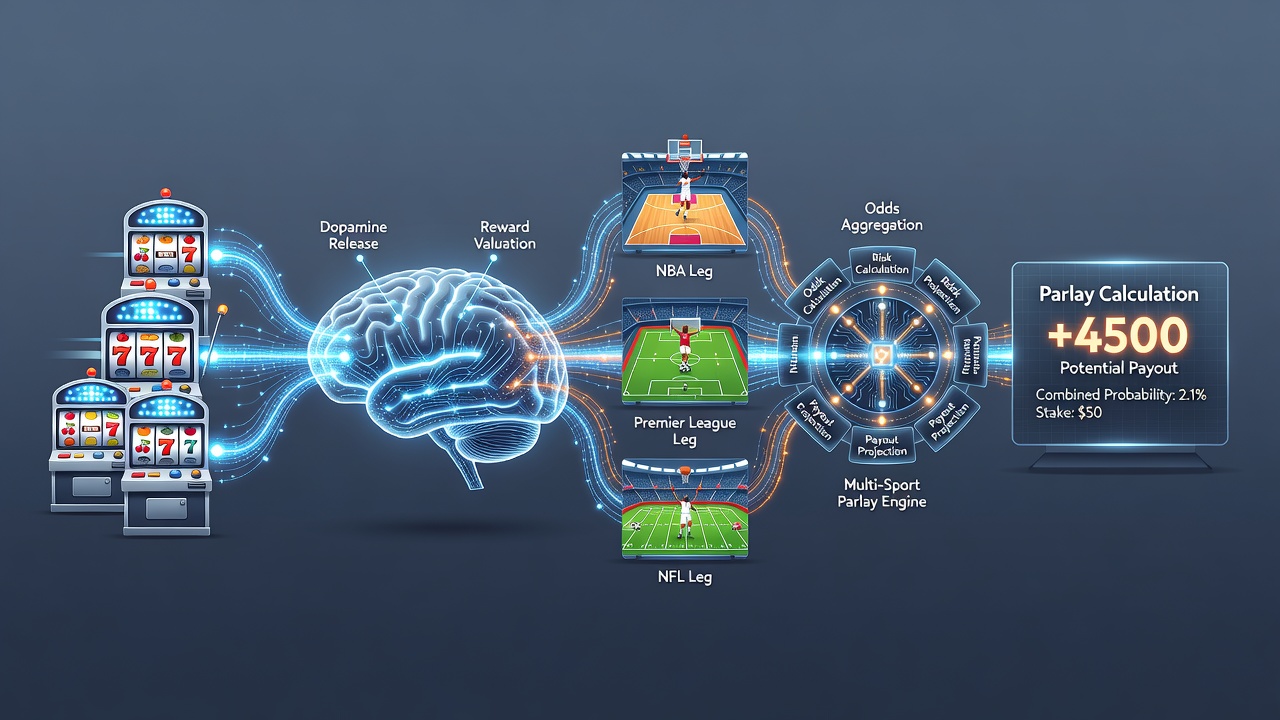
Slot machines operate through variable ratio reinforcement schedules that trigger dopamine release in the brain's mesolimbic pathway, and researchers have documented similar activation patterns when bettors evaluate multi-sport parlay odds. The nucleus accumbens responds to near-miss outcomes on reels with the same intensity it shows during probability assessments for combined wagers across football, basketball, and tennis events. Neuroimaging studies reveal that both activities engage the ventral tegmental area, which projects dopamine to regions responsible for reward prediction error and decision-making under uncertainty.
Slot mechanics rely on random number generators to deliver unpredictable payouts, and this structure mirrors the independent event probabilities that multiply in parlay calculations. A three-leg accumulator requires bettors to multiply fractional odds while accounting for bookmaker margins, yet the cognitive load activates overlapping circuits with those stimulated by spinning reels. Data from functional magnetic resonance imaging experiments show comparable blood oxygen level dependent signals in the orbitofrontal cortex during both tasks, indicating shared mechanisms for anticipating uncertain outcomes.
Neural Overlaps in Reinforcement Learning
Animal models demonstrate that rats trained on slot-like schedules exhibit heightened lever pressing when reward probabilities shift, and human participants display analogous persistence when adjusting stake sizes across multiple sports markets. The anterior cingulate cortex monitors conflict between expected and actual results in both domains, which explains why players continue chasing losses after a series of unsuccessful spins or failed accumulators. Longitudinal observations collected through August 2026 indicate that individuals who frequently engage with high-volatility slots also allocate more time to constructing complex parlay combinations, suggesting cross-transfer of reward sensitivity.
Computational models of reinforcement learning apply the same temporal difference algorithms to slot outcomes and parlay evaluations, where prediction errors update value estimates for future choices. These models predict that bettors will overvalue low-probability, high-payout combinations whether they appear on a video screen or across separate sporting fixtures. Electrophysiological recordings confirm that midbrain dopamine neurons fire in response to both reel alignments and successful parlay resolutions at rates proportional to surprise magnitude rather than absolute reward size.
Behavioral Patterns Across Platforms
Industry telemetry from North American operators shows elevated session durations when users transition between digital slots and accumulator builders within the same interface. Session data collected through the first half of 2026 reveal that players who complete at least one slot round before constructing parlays place 27 percent more legs on average than those who begin directly with sports markets. This sequence effect aligns with priming of the reward system, which lowers the threshold for accepting compounded risk in subsequent calculations.
European regulatory filings document parallel increases in both verticals during periods of regulatory liberalization, while Australian research groups have tracked comparable escalation in problem gambling screens among cohorts reporting heavy engagement with either product. The shared psychometric profile includes elevated scores on sensation-seeking scales and steeper delay-discounting curves, traits that manifest when individuals weigh immediate reel feedback against deferred parlay settlements spanning several days.
Calculation Mechanics and Cognitive Load
Multi-sport parlay computation involves converting decimal odds into implied probabilities, adjusting for correlation between events, and subtracting the overround, yet these arithmetic steps occur against a backdrop of heightened arousal inherited from recent slot exposure. Eye-tracking studies demonstrate that bettors fixate longer on payout multipliers after slot sessions, which biases them toward selecting higher-risk combinations. Software logs from major platforms indicate that the average number of legs selected rises immediately following slot play and declines only after a cooling-off interval of several minutes.
Training programs developed by cognitive scientists teach bettors to decompose parlay probabilities into independent components, and participants who complete such modules show reduced activation in reward-related regions during subsequent slot exposure. This bidirectional influence suggests that interventions targeting one activity can modulate engagement with the other through common neural substrates.
Conclusion
Evidence from neuroimaging, behavioral economics, and platform analytics converges on shared reward pathways that link slot machine reinforcement to the evaluation of multi-sport parlay calculations. Continued monitoring through regulatory bodies in multiple jurisdictions will clarify how these circuits evolve under changing product designs and market conditions.